Prologue: The Name on the Terminal Wall
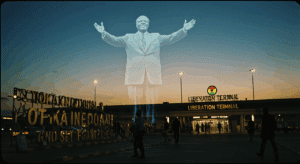
A young Ghanaian stands under the signage at Kotoka International Airport, suitcase in hand, ready to embark on a journey to the diaspora. He glances up, puzzled, and asks, “Who was Kotoka?” The answer he receives is vague, even defensive. Few explain that the man memorialized on Ghana’s primary gateway to the world was a military figure who helped orchestrate the nation’s most shameful betrayal: the 1966 coup d’état that toppled Osagyefo Dr. Kwame Nkrumah, Ghana’s founding father and Pan-African visionary.
The deeper question lingers: Why do we continue to honor the name of a man who ushered in the era of neo-colonialism?
This essay is not merely about a name but about memory, power, and justice. It seeks to make the definitive case for why Kotoka’s name must be removed and why Ghana must reclaim its symbolic landscape as part of a broader project of decolonization.
Who Was Kotoka? A Biography of Betrayal
Lieutenant General Emmanuel Kwasi Kotoka was a Ghanaian military officer who played a pivotal role in the 1966 coup that deposed President Kwame Nkrumah. On the surface, Kotoka was a soldier acting under “national interest,” but history unveils a darker narrative: the coup was backed by foreign intelligence agencies, most notably the CIA, who saw Nkrumah’s Pan-African socialism as a threat to Western geopolitical interests.
The coup, known as “Operation Cold Chop,” marked the beginning of Ghana’s descent into political instability, economic stagnation, and the dismantling of a bold attempt to build a united, self-reliant Africa. Kotoka was not a liberator but an instrument in the disruption of Black sovereignty. Memorializing him on the nation’s international airport is not only historically inaccurate but morally indefensible.
The Airport as a Site of Memory
Airports are not neutral infrastructure; they are monuments of national identity. Names, particularly those on public buildings and international gateways, project values, heroes, and histories to the world. Renaming airports is not new. In India, Bombay’s airport was renamed Chhatrapati Shivaji Maharaj International Airport to honor indigenous leadership. South Africa renamed its airports and streets to reject apartheid-era memory. In Rwanda, colonial and genocidal names have been systematically erased.
Why then does Ghana continue to cling to Kotoka?
This is not a call for historical erasure but historical correction. The current name contradicts Ghana’s liberation legacy. It sends a dangerous message to the youth: that betrayal can be honored, and that history can be rewritten by the victors, not the virtuous.
Voices in Contrast: The Debate Over Renaming
-
The Historian’s Voice: Advocates for renaming based on factual integrity. Historical records demonstrate Kotoka’s complicity in dismantling a legitimate and democratically elected government. Leaving his name in place insults those who sacrificed for Ghana’s independence.
-
The Pan-Africanist Voice: Argues that retaining Kotoka’s name is part of a larger neo-colonial strategy to erase revolutionary memory. For true decolonization, we must re-sanctify our public spaces with the names of those who fought for Africa, not against her.
-
The Pragmatist Voice: Suggests renaming might destabilize or polarize society. It is expensive, politically charged, and may seem like symbolic politics. This voice worries about precedent and feasibility.
-
The Afrocentric Futurist Voice: Proposes that Africa must stop referencing its identity in the image of its colonizers or their agents. Ghana, as a spiritual and historical center of Pan-Africanism, must lead the symbolic revolution. This is not merely about names but about reclaiming memory as sovereignty.
A Symbolic Crime of Silence
Successive Ghanaian governments have maintained a culture of avoidance. Despite civil society calls for change, the state remains inert. This inaction is not neutral; it is complicity. Ghana cannot continue to celebrate its independence while glorifying the very instruments of its postcolonial undoing.
This silence is a form of violence—a symbolic crime that prolongs our spiritual and psychological colonization. It violates the legacy of Nkrumah and insults the aspirations of generations to come.
What’s in a Name? Everything
Names are containers of power. They shape identity, direct collective memory, and embody value systems. The Kotoka name on Ghana’s airport tells the world that betrayal has a place in our pantheon of honor. That must change.
The philosopher Frantz Fanon warned that decolonization must be total—not just political but psychological. Ngũgĩ wa Thiong’o called for a “decolonization of the mind.” This begins with reclaiming symbols. Kotoka’s name is not a symbol of Ghana’s triumph but of her rupture.
Conclusion: A Flight Path to Redemption
Let us propose a new name: Kwame Nkrumah International Airport. Let it serve not only as a tribute but as a compass for future generations. Or perhaps call it Liberation Terminal, a name that reflects the spirit of Ghana’s long struggle for autonomy.
This is not just about a name. It is about national dignity, historical fidelity, and cultural reawakening. The runway must no longer be paved with betrayal but with the dreams of a continent remembering herself.