Essay 1: The Illusion of Freedom in a Consequence-Engineered World
By PowerAfrika
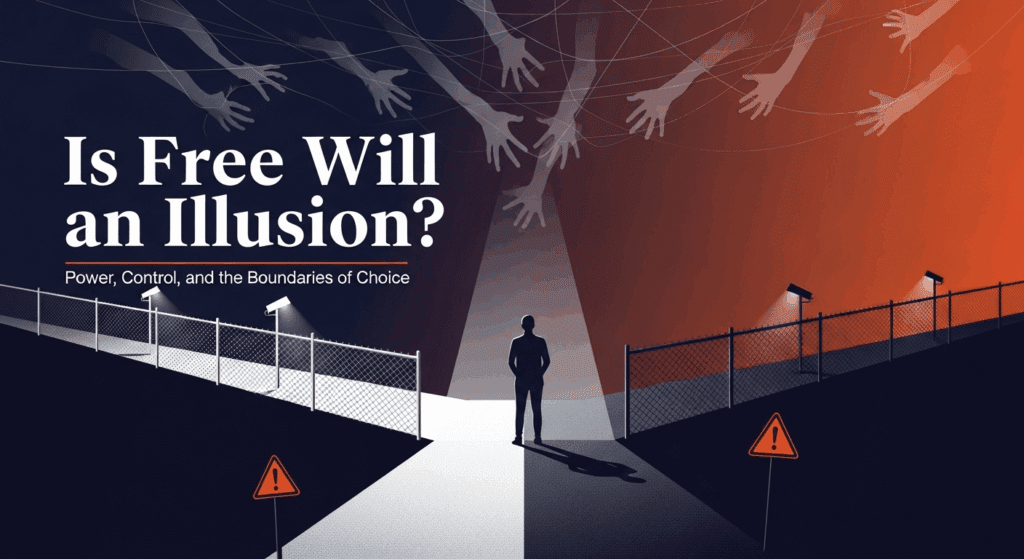
What does it mean to choose, when your choices are scripted by history, enforced by consequence, and policed by invisible systems? The idea of “free choice” is foundational to our modern identity. But is it real, or is it merely a performance rehearsed in a theater of control?
I. What Is Free Choice?
In moral terms, free choice refers to the capacity to act rightly or wrongly, bearing ethical responsibility.
In legal frameworks, it is the assumption that decisions are made consciously, justifying guilt or innocence.
In politics, it is the voter’s right to decide who governs—a supposed symbol of self-determination.
In philosophy, it is the age-old debate between determinism and autonomy.
Each of these assumes the existence of freedom. But rarely do they interrogate the context in which that freedom operates, or the price of stepping outside it.
II. Choice Is Not Agency, and Freedom Is Not License
-
Choice is the act of selecting between presented options.
-
Agency is the power to define or expand those options.
-
Freedom implies a just environment for decision-making.
-
License is mere permission to act within pre-approved boundaries.
A slave can choose what to wear but not where to live. A colonized mind can choose which master’s language to speak, but not what history to believe. This is not freedom. It is managed participation in someone else’s world.
III. Consequences Shape Behavior More Than Freedom
There are at least four types of consequences:
-
Natural – fire burns, poison kills.
-
Social – shame, approval, gossip.
-
Systemic – fines, jail, disenfranchisement.
-
Imposed – exile, execution, divine damnation.
Even when you can “choose,” if each choice is laced with engineered consequences, your will is no longer free. It is tethered.
IV. History as Architect of Limited Choice
-
Colonialism built a world where African languages, religions, and ideas were made punishable.
-
Capitalism offers a cruel choice: sell your labor or starve.
-
Patriarchy assigns worth based on gendered roles, punishing deviation with stigma or violence.
These systems endure. They did not disappear after independence or in postmodernity. They were simply remodeled.
V. Conclusion: From Illusion to Liberation
Today, we must move beyond the myth of “free will” in a vacuum. Our task is not only to demand freedom but to dismantle the systems that punish it.
That is the difference between democracy and Sankocracy.
That is the difference between managing the plantation and reclaiming the land.