
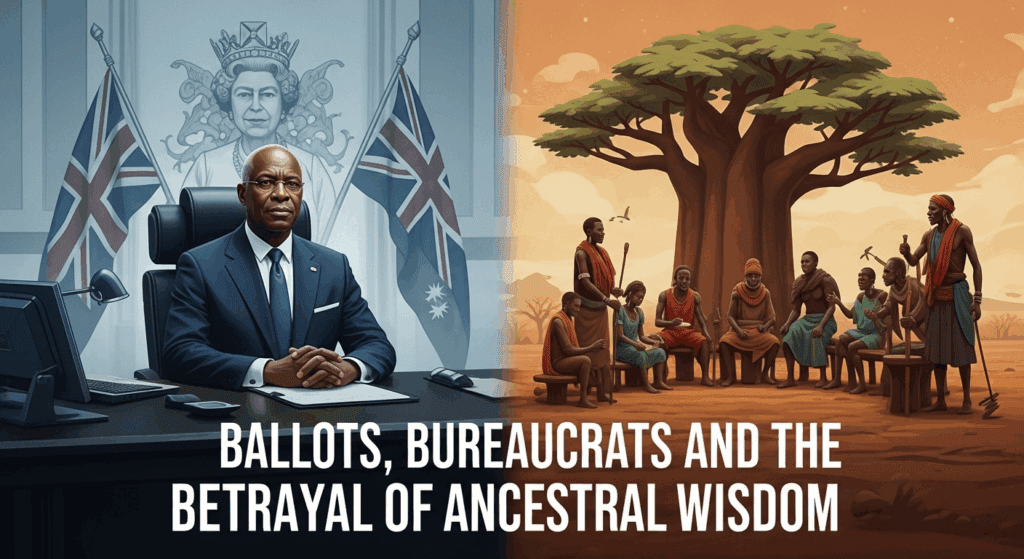
Subtitle: How Native Intermediaries Prolong the Life of Empire
Introduction:
This essay explores how African states, despite gaining nominal independence, often operate through inherited colonial governance structures. These structures, now operated by local elites, continue to prioritize foreign interests, extractive systems, and hierarchical rule. The African bureaucrat today, far from being a decolonized figure, often functions as a native intermediary in service of neo-imperial orders.
1. Who Is the Colonial Bureaucrat in Blackface?
The term denotes local African elites who maintain and execute colonial governing paradigms while bearing the image of indigenous leadership. These individuals, often products of colonial or Western-style education, serve as intermediaries between global financial systems and local populations. Their power lies in their ability to translate foreign directives into local policy, while masking subservience as leadership.
2. Inherited Machinery and Foreign Loyalties
African states retained colonial institutions: courts, civil services, land registries, taxation regimes. What changed was not the logic of governance, but the ethnicity of those who enforced it. This institutional continuity ensured the ideological preservation of foreign control, enabling new forms of economic dependency and technocratic domination.
3. Performance of Nationalism, Practice of Subjugation
Rhetoric is weaponized to pacify dissent. Pan-Africanism is mouthed without being manifested. International summits, donor conferences, and structural adjustment policies shape the real conditions of governance, often at odds with nationalist posturing. Leaders perform sovereignty in public while surrendering it in policy.
4. The Violence of Respectability and Credentialism
The modern African bureaucrat, credentialed in colonial and postcolonial academic institutions, often views indigenous governance models with contempt. Their legitimacy is tied to diplomas, foreign languages, and bureaucratic fluency, not to moral authority or community endorsement. Governance is professionalized, not spiritualized or communalized.
5. Sankocracy’s Break from Bureaucratic Colonialism
Sankocracy offers rupture, not reform. It demands not just new leaders but new legitimacy structures, rooted in ancestral wisdom, spiritual accountability, and communal consent. It seeks not the whitening of power in Black skin, but the Africanization of political meaning and function.
Core Argument:
Replacing the colonizer’s skin with African skin did not decolonize governance. It rebranded subjugation. True sovereignty demands dismantling not just the colonizer’s presence, but also his institutions, metrics, and methods.