Introduction
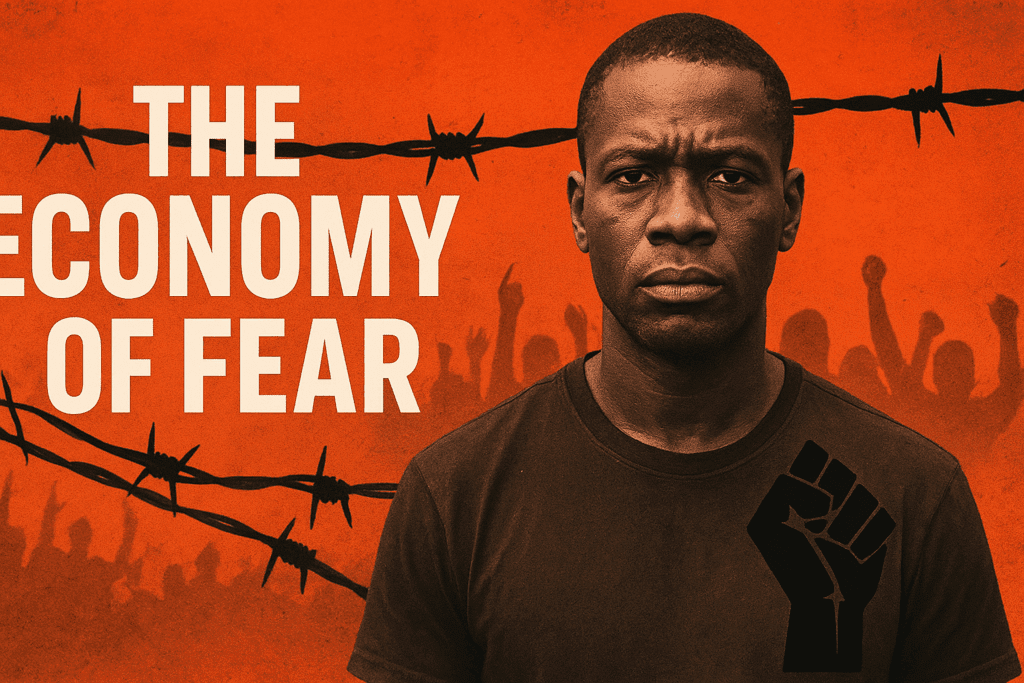
Freedom, often proclaimed as the hallmark of modern political life, remains an illusion when contextualized within the pervasive economy of fear that governs human choice. This economy is not merely a consequence of authoritarian coercion or neoliberal exploitation but a complex system where fear is calibrated and weaponized to sustain power. For African societies still grappling with the legacies of colonial domination and ongoing neo-colonial subjugation, understanding this economy is imperative to reclaiming genuine agency and sovereignty.
Fear as an Instrument of Power
Fear operates as a systemized consequence engineered to regulate behavior and produce compliance. Authoritarian regimes exemplify this through the threat of imprisonment or state violence, silencing dissent and erasing political agency. However, to reduce fear to mere state repression is to overlook its deeper systemic forms.
Neoliberal capitalism reconfigures fear economically: the precariousness of employment, the threat of poverty, and the alienation of labor produce a disciplined subject who self-regulates under the specter of economic ruin. Here, fear is internalized, shaping not only actions but consciousness itself.
In African electoral systems, fear manifests in voter intimidation, manipulated patronage, and institutionalized violence. These practices mask neo-colonial continuities beneath democratic veneers, limiting citizens’ choices to ritualized compliance rather than genuine political participation.
The Cultural and Spiritual Dimensions of Fear
The economy of fear extends beyond tangible sanctions into the cultural and spiritual realms. African communal values, encapsulated in philosophies like Ubuntu (“I am because we are”), can both resist and be co-opted by fear-based social control.
Social consequences—shame, exclusion, gossip—function as informal regulators, enforcing conformity within communities but sometimes reinforcing internal hierarchies and exclusion. Religious doctrines, through the invocation of divine punishment or ancestral displeasure, wield spiritual authority that disciplines behavior and can perpetuate internalized oppression.
This interplay of social and spiritual consequences produces what Frantz Fanon called the “internal colonizer,” where the chains of domination are accepted as self-evident truths, complicating the liberation struggle.
The Paradox of Choice Under Fear
The economy of fear reveals the paradox of freedom in postcolonial Africa: choices exist only insofar as they avoid sanctions. Citizens “choose” participation in political processes, labor markets, or social rituals, but these choices are coerced through fear of economic destitution, physical harm, or social exclusion.
The illusion of autonomy, therefore, conceals structural coercion. Real freedom requires transforming not only institutions but the context and consequences that frame choices.
Toward a Sankocratic Liberation
Dismantling the economy of fear demands a profound structural transformation rooted in African values and epistemologies. Sankocracy offers a framework where sovereignty is reclaimed through narrative autonomy, economic justice, and spiritual self-definition.
This vision calls for systems that replace punitive consequences with restorative accountability, that foster solidarity instead of division, and that cultivate psychological liberation alongside political and economic emancipation.
In this collective undertaking, African communities can transcend fear to reclaim authentic freedom—one that honors the interconnectedness of individuals and their communities, affirming choice as an expression of dignity and moral agency.
Conclusion
The economy of fear is a multilayered system of consequences wielded to control and limit African freedom. Its dismantling requires reclaiming agency at political, economic, social, and spiritual levels, guided by indigenous wisdom and revolutionary praxis. Only then can freedom be real—not a compulsion disguised as choice, but a sovereign act of collective liberation.