Editor’s Note:
This statement reflects PowerAfrika’s official position on the ownership and governance of Africa’s natural resources. It is not merely commentary on one case, but a broader indictment of systems that privatize what belongs to the people.
Prologue: The Theft of the People’s Inheritance
In the heart of Ghana’s forest belt, where rivers once ran clear and sacred groves whispered the prayers of ancestors, a new kind of plunder is unfolding. This time, it is not foreign multinationals with colonial charters, but local elites with state-issued licences and political immunity.
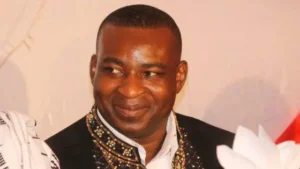
The case of Bernard Antwi-Boasiako, alias Chairman Wontumi, and Akonta Mining Limited, now before the courts of Ghana, is not merely about one man’s alleged illegality. It is a mirror held to the soul of a nation. It asks, with quiet fury: Who owns Ghana’s natural wealth—the Republic or the Republic’s rich?
The Case as It Stands
In October 2025, the Attorney General of Ghana charged Chairman Wontumi, his company Akonta Mining, and a co-director with six counts under the Minerals and Mining Act (Act 703) and its 2019 Amendment (Act 995). The allegations are grave: that they assigned mineral rights without ministerial approval, and facilitated unlicensed mining within forest reserve lands in the Western Region.
A police-EOCO operation in April seized excavators, cash, and alleged unlicensed miners on Akonta’s concession. Wontumi pleaded not guilty, posting a GHS 15 million bail, with his passport surrendered and his movement restricted pending further hearings.
These are the legal facts. But beneath them lies a deeper rot: the moral and constitutional corruption that allows Ghana’s sacred resources—its gold, timber, oil, and land—to be privatized under the illusion of legality.
The Law That Legalizes Theft
The Minerals and Mining Act (Act 703) proclaims that “all minerals in their natural state are the property of the Republic of Ghana, held in trust by the President for the people.” Yet, in practice, this “trust” has become a cynical transaction. Licenses, concessions, and mineral rights are auctioned, bartered, or politically gifted to the few—who then exploit what belongs to the many.
A licence is not ownership. A concession is not a covenant. The law’s intent was stewardship; its practice has become speculation.
When the state confers upon a private actor the exclusive right to mine the nation’s gold, it effectively alienates communal wealth to private profit. And when such actors—whether local or foreign—operate outside the spirit of stewardship, they become, in truth, no different from the colonial merchants of the nineteenth century who plundered in the name of the Crown.
Natural Law and the People’s Claim
PowerAfrika stands upon a moral axiom older than any statute: The Earth and its resources belong, by natural right, to the people who dwell upon it.
This is the essence of natural law—the principle that no government, no minister, no parliament may alienate the common inheritance of the people for private enrichment. Under this law, every ounce of gold extracted without the consent and benefit of the people is an act of theft, no matter how many seals or signatures it bears.
The laws of men may sanction plunder; but the laws of nature indict it.
The Cycle of Colonial Continuity
What we face today is not the end of colonization but its mutation. Yesterday’s British syndicates have become today’s Ghanaian political cartels. The colour of the exploiter has changed, but not the structure of exploitation.
Where once colonial administrators granted mineral concessions to London-based companies, today political elites grant them to themselves through proxy corporations. The rhetoric has changed from “Empire” to “Local Content”, yet the result is identical: a few profit from the earth while the many inherit the devastation.
We cannot, in good conscience, condemn foreign plunderers and defend domestic ones.
The Legal and Moral Indictment
PowerAfrika therefore indicts—not merely Chairman Wontumi, nor Akonta Mining—but the entire architecture that enables such privatization of public wealth.
We indict the Minerals Commission for serving as an instrument of patronage rather than stewardship.
We indict the Ministry of Lands and Natural Resources for abdicating its moral duty to the environment and the people.
We indict the political establishment that substitutes justice with loyalty, and equates legality with legitimacy.
Legality is not morality.
A corrupt law is no less corrupt because it is written in the statute books.
What Justice Demands
-
Immediate audit and suspension of all private mineral consignments issued in the last decade.
-
Repeal or radical reform of licensing provisions that allow private individuals to control national resources without community equity participation.
-
Establishment of a National Resource Trust—constitutionally protected—to hold all mineral wealth in perpetual benefit of the people.
-
Forfeiture and reclamation of assets acquired through abuse of state mining concessions.
-
Environmental reparations from companies and individuals who have profited from the degradation of communal lands and rivers.
Let it be known: Ghana does not need new mining magnates; it needs moral custodians.
The Moral Horizon
History has a cruel rhythm: nations that sell their soil soon find themselves sold. If Ghana continues to exchange its natural patrimony for political favours, it will awaken one day to find its gold gone, its rivers dead, its sovereignty hollow.
The gold that glitters in private vaults today is the blood of tomorrow’s generations. Every ounce mined unjustly deepens the wound of our underdevelopment.
This is not merely an economic crime—it is a civilizational betrayal.
Epilogue: The Case Beyond the Courtroom
The Wontumi trial may end in conviction or acquittal—that is for the courts. But the greater trial is moral and national: Can Ghana reclaim her soul from the grip of private greed?
Until we abolish the laws that allow the few to monopolize the wealth of the many, independence will remain a flag without freedom.
PowerAfrika calls for a new legal order—one where natural resources are not consigned to individuals but consecrated to the people.
Let the gold return to the soil, or let its wealth flow into the veins of the nation that bore it. Anything less is treason dressed in legality.