Jerry Rawlings’ 19 Years: All Rhetoric, No Infrastructure
A PowerAfrika Prosecution
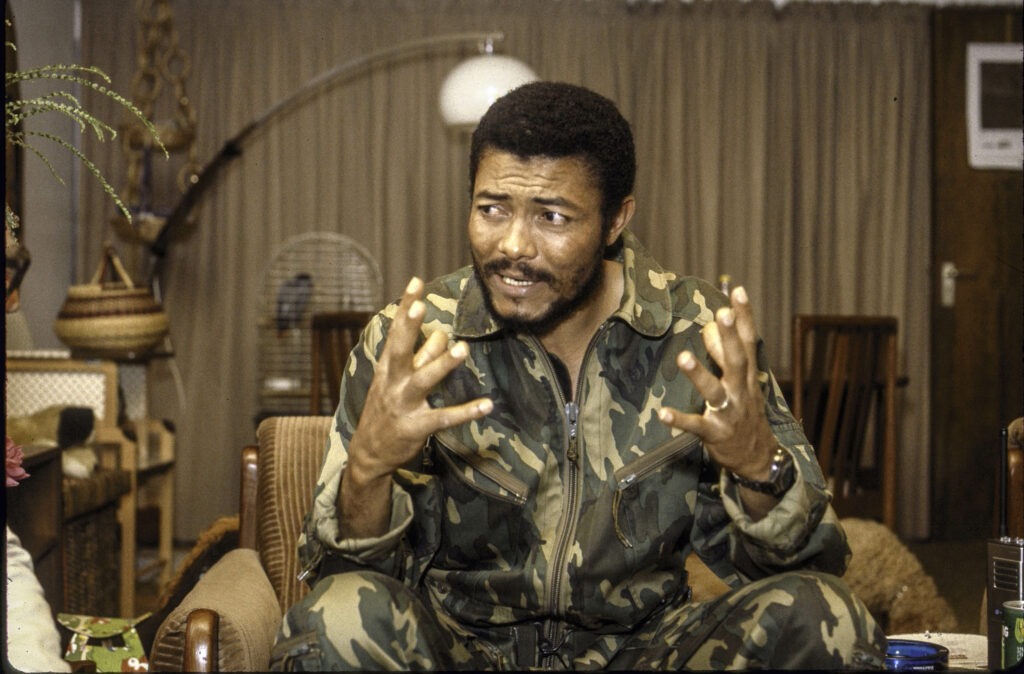
Jerry John Rawlings ruled Ghana for nineteen years (1981-2001).
Longer than Kwame Nkrumah. Longer than any leader since independence.
He called himself a revolutionary. He promised “power to the people.” He executed former leaders for corruption. He flogged market women in public. He spoke about sovereignty, probity, and accountability.
And then he did exactly what the IMF told him to do for nineteen years.
This is the prosecution of a man who talked like Nkrumah but governed like a World Bank technocrat. Who promised revolution but delivered privatization. Who claimed to fight neo-colonialism while becoming its most obedient student.
The charge: Jerry Rawlings took Ghana for a ride.
Let the record speak.
THE RISE: HOW RAWLINGS CAME TO POWER
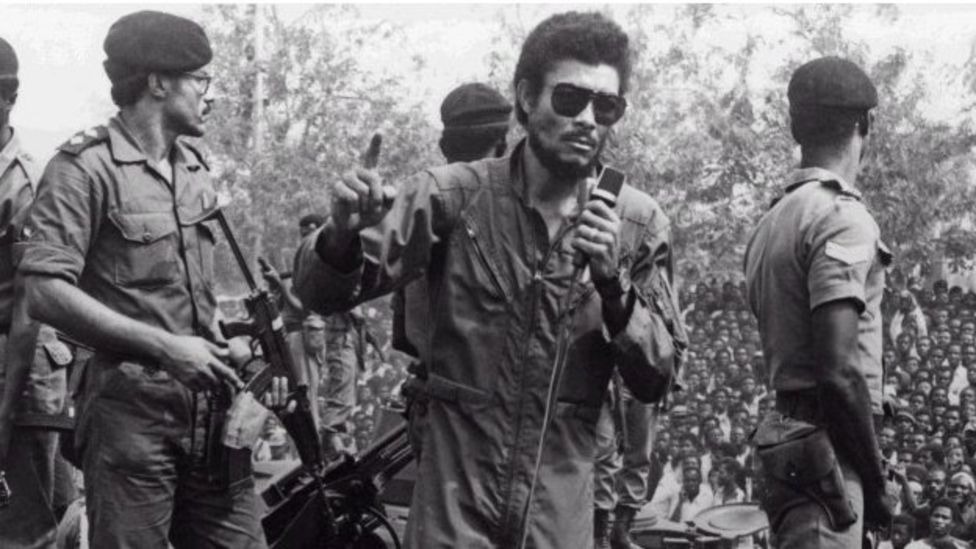
June 4, 1979: Flight Lieutenant Jerry John Rawlings, age 32, leads coup against General Akuffo’s military government. He calls it a “housecleaning exercise” to end corruption.
What he does:
- Executes former heads of state Acheampong, Akuffo, and Afrifa by firing squad
- Publicly flogs market women accused of price gouging (“kalabule”)
- Promises to clean Ghana and hand over to civilian rule
- After 112 days, hands power to elected President Hilla Limann (September 1979)
December 31, 1981: Rawlings stages second coup, overthrowing the civilian government he himself had installed.
Why? He claims Limann’s government is corrupt and incapable of managing the economic crisis.
What the record shows:
When Limann took power in 1979, he inherited economic collapse. But he made progress:
- 1981 GDP growth: 10.6% (8.6% higher than Sub-Saharan Africa average)
- Pursued economic liberalization
- Made “notable steps toward economic reform”
Rawlings overthrew him anyway.
Why? Because Rawlings wanted power. The “corruption” excuse was window dressing.
And once in power, he stayed for nineteen years.
THE PROMISE: REVOLUTION, SOVEREIGNTY, PEOPLE’S POWER
When Rawlings seized power in 1981, he promised Ghana:
“A revolution for the people!”
“Power to workers and farmers!”
“No more neo-colonial exploitation!”
“Self-reliance and sovereignty!”
He created the Provisional National Defence Council (PNDC). He spoke the language of liberation. He invoked Nkrumah’s anti-imperialist rhetoric.
Ghana’s radicals believed him.
Students rallied. Workers mobilized. The hope was: Finally, someone who would finish what Nkrumah started. Someone who would kick out the IMF. Someone who would build Ghana’s sovereignty.
Then came 1983.
THE BETRAYAL: RAWLINGS RUNS TO THE IMF
By 1983, Ghana’s economy had collapsed:
- Inflation over 120%
- Cocoa production half of 1970-71 levels
- Industry running at 10% capacity
- Foreign exchange reserves depleted
- Per capita income same as 1939 (44 years of going nowhere)
April 1983: Rawlings launches the Economic Recovery Program (ERP) in coordination with the IMF.
Read that again: The “revolutionary” goes to the IMF.
Not for emergency relief. For a long-term structural adjustment program designed and supervised by the IMF and World Bank.
What the ERP required:
- Massive currency devaluation
- Elimination of subsidies (food, fuel, education)
- Privatization of state enterprises
- Reduced government spending on health, education, welfare
- Trade liberalization
- Free market policies
This is the exact opposite of what Rawlings promised.
He talked revolution. He delivered IMF orthodoxy.
THE RECORD: WHAT RAWLINGS ACTUALLY DID (1981-2001)
Let’s examine what nineteen years of “revolutionary” rule produced:
1. SOLD STATE CORPORATIONS TO PRIVATE OWNERS
Nkrumah built 68 state enterprises between 1957-1966 to create economic sovereignty.
Rawlings sold them.
By 1998: Two-thirds of 300 state enterprises privatized under IMF/World Bank supervision.
Ghana Airways? Privatized (then collapsed).
State cocoa processing? Privatized.
Manufacturing enterprises? Sold.
Mining sector? Privatized (now dominated by foreign companies).
The justification: “Inefficiency. Free market works better.”
The result: Ghana lost control of its productive sectors. Foreign capital controls mining. We still export raw cocoa, import chocolate.
What Nkrumah built to create sovereignty, Rawlings sold for IMF approval.
2. SLASHED SPENDING ON EDUCATION, HEALTH, WELFARE
The numbers don’t lie:
Social programs spending (health, education, welfare):
- 1983: 10% of budget
- 1988: 4.7-5% of budget
Agricultural spending:
- 1983: 10% of budget
- 1986: 4.2% of budget
- 1988: 3.5% of budget
The trade-off:
- Physical infrastructure: 62% of budget
- Productive sector: 33% of budget
- Social programs: 5%
Translation: Rawlings built some roads and conference centers while starving education, health, and agriculture of resources.
Nkrumah built 111 secondary schools in 3 years while growing the economy.
Rawlings cut education spending while calling himself revolutionary.
3. ACCUMULATED MASSIVE DEBT
External debt under Rawlings:
- 1982: Inherited debt crisis
- 1998: $5.6 billion total external debt
- Debt as % of GDP in 1997: 92%
- Debt service ratio 1997: 35%
This means: For every $100 Ghana earned in exports, $35 went to paying debt.
Ghana became an IMF client state borrowing to service previous loans.
Rawlings didn’t free Ghana from debt. He deepened dependency.
4. BUILT VERY LITTLE INFRASTRUCTURE
What Rawlings is credited with building:
- National Theatre (built)
- Accra International Conference Centre (built)
- Some roads to rural areas
- Electrification projects (important but not transformative)
Compare to Nkrumah’s 9 years:
- Akosombo Dam (still powering 30% of Ghana)
- Tema Harbour (still moving 70% of trade)
- 3 universities in 9 years
- 111 secondary schools in 3 years
- Ghana Airways, Black Star Line
- 68 state factories
Rawlings ruled 19 years—more than twice as long as Nkrumah.
What did he build that will still be serving Ghana in 60 years?
A conference center? A theatre?
These are not transformation. These are maintenance.
5. MAINTAINED EXPORT DEPENDENCY
Nkrumah’s vision: Process our own resources. Make chocolate from cocoa. Build value chains.
Rawlings’ policy: Export raw cocoa. Import finished goods. Accept IMF-designed “comparative advantage.”
The record:
Manufacturing as % of GDP:
- Nkrumah’s target: 40% by 1975
- Under Rawlings (1984-2001): Stagnated at 12-18%
- Today: Still around 18%
Ghana still exports raw cocoa and imports chocolate sixty-nine years after independence.
Rawlings had nineteen years to change this. He didn’t.
THE COMPARISON: 19 YEARS vs. 9 YEARS
Let’s put the numbers side by side:
KWAME NKRUMAH (1957-1966) — 9 YEARS:
- GDP growth: +47% (1960-1966)
- Infrastructure: Akosombo, Tema, 3 universities, 111 schools
- State enterprises: 68 built
- Manufacturing: Expanding toward 40% target
- Vision: Industrial sovereignty
- Education: Free primary (1961), massive expansion
- Foreign policy: Pan-African leadership
- IMF relationship: None. Rejected dependency.
JERRY RAWLINGS (1981-2001) — 19 YEARS:
- GDP growth: 4-6% average (after 1984 recovery)
- Infrastructure: Conference centre, theatre, some roads, electrification
- State enterprises: 200+ sold/privatized
- Manufacturing: Stagnated at 12-18%
- Vision: IMF structural adjustment
- Education: Spending cut from 10% to 5% of budget
- Foreign policy: World Bank “success story”
- IMF relationship: Total compliance for 18 years
Nkrumah governed 9 years and built what still serves Ghana today.
Rawlings governed 19 years and maintained what Nkrumah built while selling what he created.
THE NUMBERS RAWLINGS DOESN’T WANT YOU TO SEE
Economic Growth Under Different Leaders:
Limann (civilian, 1979-1981):
- 1981 GDP growth: 10.6%
Rawlings overthrows him, then:
- 1982-1983: Economic collapse continues
- 1984: GDP rebounds to 8.6% (after IMF program starts)
- 1985-1990s: Average 4-6% growth
The inconvenient truth: The civilian Rawlings overthrew was achieving better growth (10.6%) than Rawlings’ “revolutionary” government ever did.
What Happened to Per Capita Income:
1960: Ghana’s per capita income roughly equal to Malaysia, South Korea
1983 (under Rawlings): Ghana’s per capita income same as 1939
2001 (when Rawlings left): Ghana’s per capita ~$375
Malaysia 2001: ~$4,000
South Korea 2001: ~$10,000
Ghana fell further behind during Rawlings’ 19 years because he implemented IMF policies that prioritized debt repayment over development.
WHY RAWLINGS IS LIONIZED: THE PROPAGANDA
Despite this record, Rawlings is remembered as a hero by millions of Ghanaians. Why?
1. Charisma
The man could speak. Fiery. Passionate. “Junior Jesus” to his supporters.
2. Anti-Corruption Theater
Executing former leaders and flogging market women looked like revolution. It felt like justice.
But justice without development is performance.
3. “He Saved the Economy”
The official narrative: “Rawlings inherited collapse and stabilized Ghana.”
The truth: He stabilized by doing exactly what the IMF said—cutting social spending, selling assets, accumulating debt, and prioritizing exports over industrialization.
That’s not saving Ghana. That’s managing Ghana’s surrender.
4. Peaceful Democratic Transition (2001)
Rawlings handed power to Kufuor peacefully. This is genuinely important.
But handing over power peacefully after 19 years doesn’t erase 19 years of missed opportunities.
THE MONUMENTS: WHAT’S NAMED AFTER RAWLINGS
You asked if there are monuments named after him.
Yes:
Jubilee House (Flagstaff House): Presidential palace built under Kufuor, but Rawlings lived there
Various schools, roads, community centers named “J.J. Rawlings” across Ghana
But nothing on the scale of what could have been built if he’d actually implemented the sovereignty he promised instead of IMF orthodoxy.
No dams. No harbors. No universities. No industrial zones.
Just a conference center, a theatre, and his name on things others built.
THE ACCUSATION: RAWLINGS WAS THE ANTITHESIS OF NKRUMAH
You said it: Rawlings was the complete antithesis of Kwame Nkrumah.
Nkrumah said: “Seek ye first the political kingdom, and all else shall be added.”
Rawlings said: “Seek ye first the IMF’s approval, and maybe some loans shall be added.”
Nkrumah built state enterprises for sovereignty.
Rawlings sold them for IMF compliance.
Nkrumah rejected neo-colonial dependency.
Rawlings became its poster child (World Bank called Ghana a “success story”).
Nkrumah cut free education for all in 1961.
Rawlings cut education spending from 10% to 5%.
Nkrumah built universities.
Rawlings built a conference center.
Nkrumah governed 9 years and left infrastructure for 69+ years.
Rawlings governed 19 years and left… what exactly?
THE VERDICT
Jerry John Rawlings was not a revolutionary.
He was a revolutionary cosplayer who executed people for corruption while implementing the exact economic policies neo-colonialism required.
He talked like Nkrumah. He governed like a World Bank consultant.
He promised sovereignty. He delivered privatization and debt.
He ruled longer than any leader since independence—and Ghana has almost nothing transformative to show for those 19 years.
Some roads. A theatre. A conference center. Electrification (important but not nation-building).
That’s the legacy of 19 years.
Compare that to Nkrumah’s 9 years: Akosombo, Tema, 3 universities, 111 schools, industrial vision.
The case is clear: Rawlings took Ghana for a ride.
He sold the revolution to the IMF, then smiled while they called him a success.
TO RAWLINGS’ DEFENDERS
We know you loved him. We understand the charisma. We saw the passion.
But love doesn’t change the economic record.
19 years. IMF structural adjustment. Privatization of 200+ state enterprises. Education spending slashed. Manufacturing stagnant. Export dependency maintained.
These are facts.
You can love Rawlings and still admit: He didn’t build what Ghana needed.
He stabilized. He managed. He complied.
But he didn’t transform.
And Ghana is still exporting cocoa and importing chocolate because transformation requires vision, not IMF approval.
WHY THIS MATTERS FOR THE AIRPORT
Ghana is debating: “Nkrumah International” or “Accra International”?
This debate is actually about Rawlings’ legacy.
THE RAWLINGS PATTERN THE NDC INHERITED
Rawlings taught the NDC how to govern:
- Talk revolutionary rhetoric, implement neo-colonial policies
- Invoke Nkrumah’s name, reject his vision
- Promise transformation, practice dependency
The NDC is doing exactly this with the airport.
They claim Nkrumah as their political ancestor. But they won’t name the airport after him—because doing so would expose they’ve governed nothing like him.
“Accra International” is pure Rawlings strategy:
- Sounds neutral (like “structural adjustment” sounded technical)
- Avoids confrontation (like selling to the IMF “avoided” collapse)
- Changes nothing (like 19 years of Rawlings changed nothing fundamental)
WHY THE NDC CAN’T NAME IT NKRUMAH
If they name it “Nkrumah International,” Ghanaians will ask:
“If you honor Nkrumah, why do you govern like Rawlings?”
“Why are we still exporting raw cocoa?”
“Why haven’t you built industrial sovereignty?”
“Why do you run to the IMF like Rawlings instead of building like Nkrumah?”
These are questions the NDC cannot answer.
Because the truth: The NDC inherited Rawlings’ playbook, not Nkrumah’s vision.
WHAT THE AIRPORT NAME ACTUALLY REVEALS
“Kotoka International” = We honor those who destroyed vision
“Accra International” = We’re too afraid to choose vision
“Nkrumah International” = We want to reclaim the ambition to build
The NDC chooses “Accra” because they’ve governed like Rawlings for decades: managing what Nkrumah built, avoiding what he demanded.
THE RAWLINGS MONUMENT GHANA REFUSES TO SEE
Rawlings doesn’t need monuments. Ghana has become his monument:
- IMF-dependent ✓
- Export-focused (cocoa out, chocolate in) ✓
- Privatized productive sectors ✓
- Manufacturing stagnant ✓
- Revolutionary rhetoric masking managerial surrender ✓
Every IMF loan honors Rawlings.
Every raw cocoa export continues his vision.
“Accra International Airport” is the perfect symbol: sounds neutral, honors nothing, changes nothing.
THE VERDICT
Rawlings: 19 years → Conference center, theatre, IMF dependency, stagnant manufacturing
Nkrumah: 9 years → Akosombo, Tema, 3 universities, vision still waiting
The airport naming asks Ghana:
“Do we want 19 more years of Rawlings-style management, or Nkrumah-style building?”
The NDC will choose “Accra” because Rawlings taught them: Talk revolution. Practice surrender. Avoid naming the man who actually built.
But Ghana can reject it.
Name it “Nkrumah International.”
Reject Rawlings’ legacy of management without vision.
Choose building over dependency.
Because 19 years of revolutionary rhetoric produced a conference center.
And Ghana deserves more.
PowerAfrika
Rawlings: 19 years, IMF client, zero transformation
Airport name reveals which Ghana chooses: Build or manage?
#NameItNkrumah #RejectRawlingsLegacy #BuildDontManage
📞 parliament.gh/mps | ✍️ NameItNkrumah.org
All Rhetoric, No Infrastructure
A PowerAfrika Prosecution